
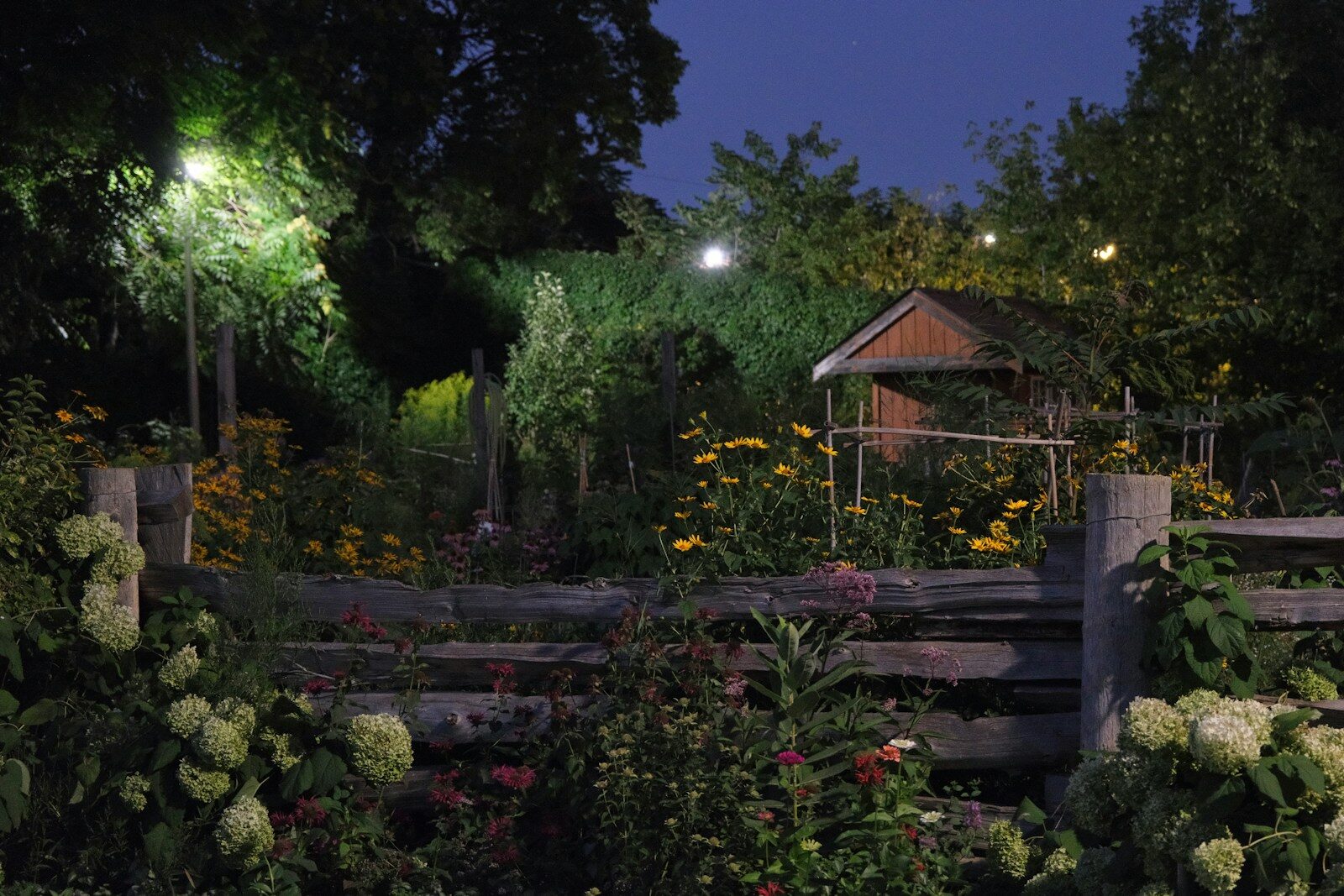




A garden can look completely different once the sun goes down. During daylight hours, flowers, foliage and carefully planned borders tend to take centre stage, but after dark, lighting, fragrance and the shape of the planting become much more important.
With a little thought, you can create an outdoor space that feels just as inviting in the evening as it does on a sunny afternoon. Whether you have a large garden with established borders or a small patio outside the back door, there are plenty of ways to make better use of those evening hours.
Choose Plants That Release Their Fragrance At Night
Some plants are particularly good at attracting attention after sunset, releasing their scent more strongly as the evening progresses. These are worth considering if you enjoy spending time outdoors during warmer evenings.
Good choices include:
- Night-scented stock: A relatively modest-looking annual with an exceptionally strong fragrance after dark.
- Evening primrose: Produces attractive yellow flowers that open towards evening, bringing a little extra interest to borders.
- Jasmine: Popular for its delicate white flowers and distinctive scent, particularly when grown near seating areas.
- Honeysuckle: A useful climbing plant that can cover fences, arches and trellises while providing fragrant flowers.
- Nicotiana: Some varieties produce tubular flowers with a lovely evening fragrance.
Position scented plants close to patios, garden benches or doorways where you can appreciate their perfume without having to wander through the borders.
Use Lighting To Highlight Garden Features
Outdoor lighting doesn’t need to be complicated or expensive. A few well-positioned lights can make a significant difference, particularly if you want to create a welcoming atmosphere rather than illuminate every corner.
Think about what you want to draw attention to. A mature tree, attractive ornamental grass or interesting stone feature can look particularly striking when softly illuminated from below.
Some options worth considering include:
- Solar stake lights along pathways and borders.
- Low-level LED lighting around steps and seating areas.
- Wall lights beside patios and outdoor dining spaces.
- Subtle spotlights highlighting trees and architectural plants.
- Festoon lighting above seating areas for a more relaxed, informal feel.
Avoid placing too many lights close together. A mixture of illuminated and darker areas generally creates a more interesting effect than flooding the entire garden with bright lighting.
For permanent installations, use fittings and electrical connections specifically designed for outdoor use, and have mains-powered garden lighting installed by a qualified electrician.
Make Your Seating Area More Inviting
If you want to enjoy your garden after dark, comfortable seating is essential. A simple bench can work beautifully in a smaller space, while larger gardens might accommodate an outdoor sofa, dining set or dedicated seating area.
Consider positioning furniture where it can benefit from both shelter and attractive views. Sitting beneath a pergola, for example, provides some protection while allowing you to incorporate climbing plants and overhead lighting.
Outdoor cushions and blankets can make seating more comfortable as temperatures drop, although it’s worth choosing weather-resistant fabrics or having somewhere dry to store them.
If you regularly entertain outdoors, a table with enough room for food and drinks will make the space more practical.
Introduce Plants With Interesting Shapes And Textures
Flowers aren’t the only way to create an attractive evening garden. Plants with distinctive silhouettes, architectural shapes and interesting foliage can look particularly effective when viewed in low light.
Ornamental grasses are especially useful. Their fine leaves and flower heads catch the breeze, creating movement and texture that can be highlighted with carefully positioned lighting.
Other plants worth considering include:
- Phormiums: Their strong, upright leaves provide architectural structure.
- Ferns: Particularly useful in shaded areas, where their foliage creates interesting shapes.
- Silver-leaved plants: Varieties such as lavender and artemisia can reflect available light.
- Bamboo: Useful for adding height and movement, although clump-forming varieties are preferable in many domestic gardens to prevent unwanted spreading.
Think about how plants will look throughout the year, rather than concentrating solely on their summer flowers.
Don’t Forget The Night-Time Wildlife
An evening garden isn’t just somewhere for people to relax. It can also provide valuable habitat for wildlife.
Moths, bats and other nocturnal creatures are part of a healthy garden ecosystem, so it’s worth making a few wildlife-friendly choices.
Planting night-scented flowers can attract moths, which in turn provide food for bats and other animals. Leaving some areas of the garden undisturbed also creates shelter for insects and other small creatures.
Be mindful of artificial lighting, however. Excessive illumination can disrupt nocturnal wildlife, so use warm-coloured, low-level lights where possible and switch them off when they’re no longer needed.
A Garden Worth Enjoying At Any Hour
A well-designed garden shouldn’t become redundant when the daylight fades. By combining fragrant plants, thoughtful lighting, comfortable seating and interesting planting, you can create an outdoor space that offers something different after sunset.
You don’t have to undertake a major landscaping project, either. A scented climber beside the patio, a few solar lights along a pathway or a comfortable chair beneath a pergola could be enough to encourage you to spend a little more time outside.
Sometimes, the best way to appreciate your garden is to see it from a completely different perspective.
Photo by Spencer Liao.